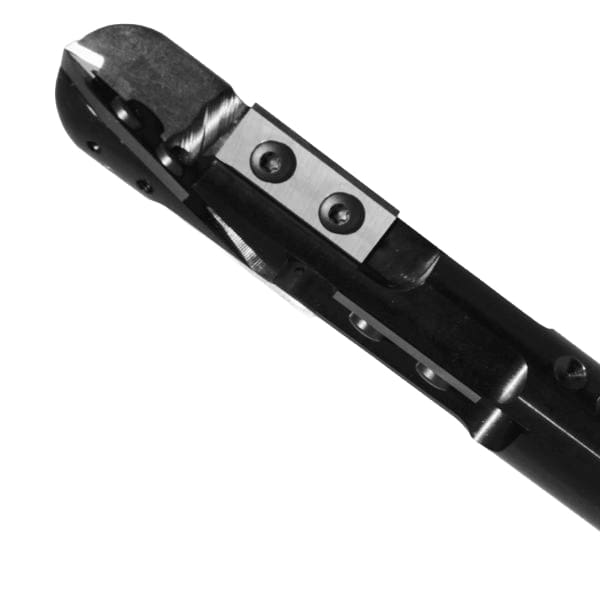
A ballnose router bit has a rounded cutting tip that is designed to machine curved surfaces, contours and three-dimensional profiles. Ballnose bits are commonly used for 3D carving, mold and pattern work, sculpted surfaces, radius cuts and finish machining on CNC routers and machining centers.
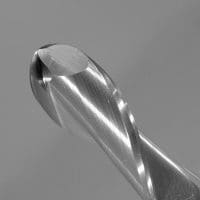
2-Flute Ballnose Upcut Router Bit for Contouring
In stock
Price range: $46.00 through $279.00
Typical Machining Range: 16,000–18,000 RPM at 400–600 in./min. Actual parameters may vary based on tool diameter, material, machine rigidity and workholding. For application-specific settings, see our Chip Load Calculator.
The 2-flute ballnose router bit is a solid carbide CNC tool designed for contouring, carving, fluting, cove cutting and shallow concave profiles in wood and wood-based materials. Its rounded ballnose cutting geometry produces smooth radiused cuts and flowing contours, making it particularly well suited for decorative machining and 3D profiling applications.
The ballnose geometry is also useful for surfacing and leveling uneven workpieces. Unlike a flat-bottom tool, the rounded cutting profile helps minimize visible transition or witness lines between adjacent tool passes, producing a smoother blended surface.
The 2-flute upcut design provides efficient chip evacuation while maintaining the cutting-edge engagement required for a consistent finish.
For higher-volume production of common cove or flute radii, an insert-style core box cutter may provide a more economical solution because its replaceable inserts can be rotated for an additional cutting cycle before replacement.
Have a Question?
Ask about this product
2-Flute Ballnose Upcut Router Bit for Contouring
Product FAQs
A flat-end bit produces a flat-bottom cut and is typically used for profiling, pocketing and general material removal. A ballnose bit has a rounded cutting end that follows curved and contoured surfaces more smoothly, making it better suited for 3D machining and finishing complex shapes.
Depending on the tool geometry, solid carbide ballnose bits can be used to machine solid wood, MDF, plywood, plastics, composites, fiberglass and certain non-ferrous materials. The correct flute geometry and cutting parameters should always be matched to the specific material.
Yes. Ballnose router bits are widely used for 3D CNC carving because the rounded cutting edge can follow changes in surface height and direction while producing a smooth, contoured finish. Smaller ballnose diameters generally allow greater detail, while larger diameters can machine larger areas more efficiently.
The best diameter depends on the size and detail of the part, required surface finish, machining depth and desired production speed. That said, there are minimum diameters required for an insert tool of about 20mm. Smaller-diameter ballnose bits are useful for fine detail and tight contours, while larger tools can remove material more efficiently and reduce machining time on broader surfaces.
Yes, although the optimum tool may differ for each operation. A larger or more aggressive tool is often used for roughing to remove material efficiently, followed by a smaller ballnose bit for the final finishing pass. This can reduce machining time while still producing a detailed, smooth surface.
Surface finish is affected by tool diameter, stepover, feed rate, spindle speed, tool sharpness and machine rigidity. Reducing the stepover between passes generally produces a smoother finished surface, although it also increases machining time.
Consider the material being machined, required radius or detail, cutting depth, desired surface finish, machine type, spindle speed and feed rate. GDP Tooling can help recommend the appropriate ballnose geometry and cutting parameters for your CNC application.
Both can produce rounded grooves and concave profiles. A solid carbide ballnose tool is particularly versatile for CNC contouring and 3D machining. For repetitive production of certain fixed-radius grooves, an insert-style core box cutter with replaceable cutting edges may be more economical.
The 2-flute ballnose upcut router bit is designed for CNC applications requiring smooth radiused profiles rather than square-bottom cuts. Its rounded cutting tip makes it an excellent choice for contouring, carving, decorative fluting, cove cutting, shallow concave profiles and 3D machining.
Manufactured from solid carbide, the tool provides the rigidity and cutting-edge consistency required for accurate CNC routing. The two-flute upcut geometry evacuates chips away from the cutting zone, helping control heat while maintaining efficient material removal.
One particularly useful application is surfacing uneven or irregular workpieces. Because a ballnose cutter transitions gradually through its radius, it can reduce the visible lines that may occur between adjacent machining passes. This makes it useful when blending or leveling surfaces where a smoother transition between passes is desirable.
For repetitive production of larger-volume fluting in common radii such as 1/2″, 5/16″ and 3/8″, GDP Tooling also offers an insert-style core box cutter. The replaceable insert can be rotated for an additional cutting cycle, potentially making it more economical for high-volume applications. Larger radius requirements can also be evaluated for the specific application.