
PCD Diamond Saw Blades
Call for Price
- Performance Guarantee
- Price Match Promise
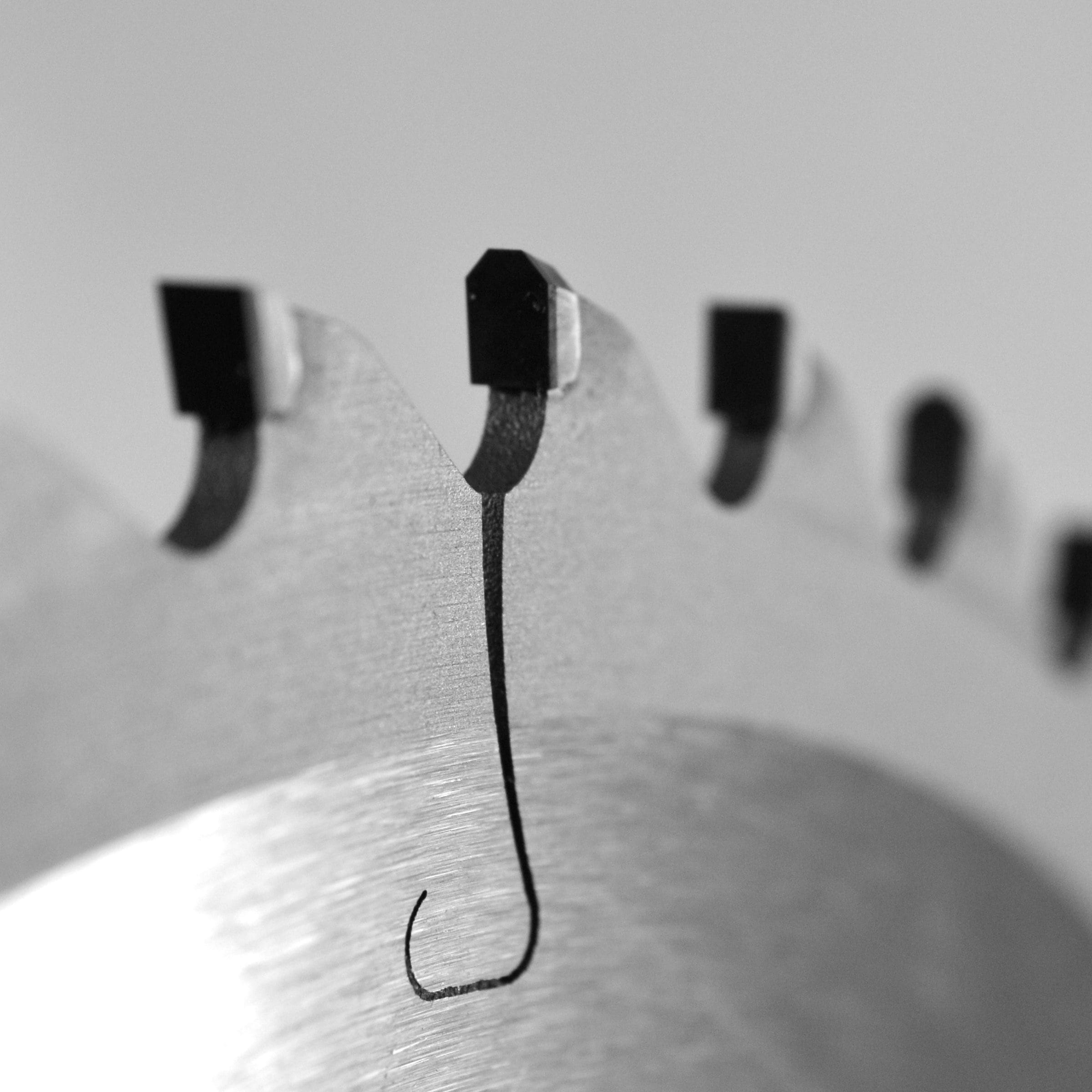
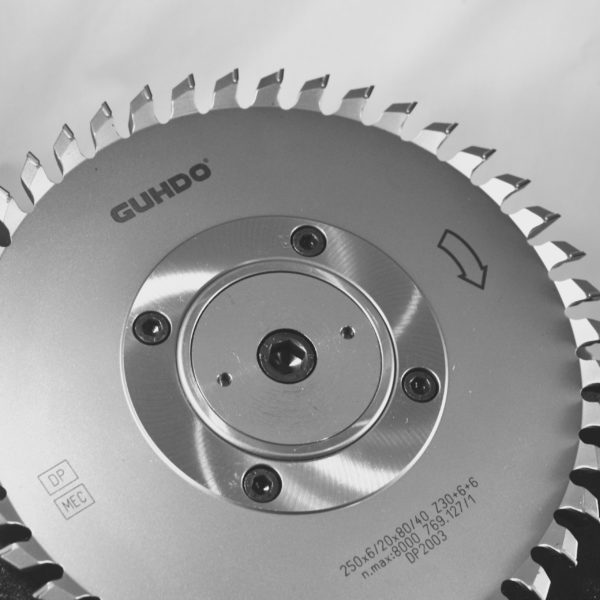
When conventional carbide saw blades require frequent sharpening or replacement, PCD (Polycrystalline Diamond) saw blades can provide dramatically longer tool life and more consistent cutting performance in abrasive materials.
GDP Tooling supplies precision diamond-tipped circular saw blades for high-production cutting of MDF, particleboard, melamine, HPL, laminate flooring, solid surface materials, phenolics, cement fiber board, fiberglass, CFRP and other engineered and composite materials.
PCD cutting edges offer exceptional wear resistance, making diamond saw blades particularly valuable in applications where abrasive materials quickly dull conventional carbide. Longer cutting runs mean fewer blade changes, less machine downtime and more consistent cut quality throughout production.
Selecting the right PCD saw blade requires more than matching diameter and bore. Material composition, panel thickness, machine type, feed rate, RPM, tooth count, hook angle, tooth geometry, kerf, plate thickness and scoring requirements all influence blade performance.
GDP Tooling offers both standard and custom PCD saw blade configurations, backed by more than 40 years of diamond tooling expertise.
Our North American PCD service center also provides precision diamond saw blade sharpening and repair, helping maximize the usable life and long-term value of your PCD tooling investment.
Have a Question?
Ask about this product
PCD Diamond Saw Blades
PCD Diamond Saw Blades for Abrasive Materials & High-Production Cutting
When abrasive materials rapidly wear conventional carbide saw blades, PCD (Polycrystalline Diamond) saw blades can provide a significant advantage in tool life, productivity and overall cutting cost.
Unlike conventional carbide-tipped blades, PCD saw blades use cutting edges manufactured from synthetic polycrystalline diamond—an extremely hard, highly wear-resistant cutting material. This makes PCD particularly well suited for repetitive, high-production sawing of abrasive engineered materials and composites.
The initial cost of a diamond saw blade is higher than that of a conventional carbide blade, but purchase price alone doesn’t determine tooling cost. The more important question is often:
How many parts or linear feet can the blade cut before it has to come off the machine?
When a PCD blade can remain in production significantly longer, the savings can extend well beyond sharpening costs. Fewer blade changes can mean less machine downtime, less operator intervention, more consistent finished-part quality and greater production efficiency.
Materials Ideally Suited for PCD Saw Blades
PCD saw blades are particularly effective when cutting materials that are highly abrasive to conventional carbide cutting edges.
Typical applications include:
- MDF and HDF
- Particleboard and chipboard
- Melamine-faced panels
- High Pressure Laminate (HPL)
- Laminate flooring
- Solid surface materials
- Phenolic materials
- Sample Cutting
- Cement fiber board
- Gypsum-based panels
- Fiberglass and FRP/GFRP
- Carbon Fiber Reinforced Polymer (CFRP)
- FR-4 and other glass-reinforced laminates
- Engineered and specialty composite panels
- Other abrasive homogeneous and laminated materials
The common denominator is abrasion. Glass fibers, carbon fibers, mineral fillers, resins and other abrasive components can rapidly round or degrade conventional carbide cutting edges.
PCD’s exceptional wear resistance allows the cutting edge to maintain its geometry substantially longer under the right operating conditions.
PCD vs. Carbide Saw Blades
Carbide remains an excellent cutting material and is often the correct choice for many sawing applications. PCD should not automatically be selected simply because longer tool life sounds desirable.
The economics change when production volume and material abrasiveness are high enough that carbide blades require frequent sharpening or replacement.
In appropriate applications, a PCD saw blade may provide many times the tool life of a comparable carbide blade. GDP Tooling has seen applications where diamond blades can outperform carbide by approximately 30–50 times, depending on the material, machine and operating conditions.
That difference can dramatically reduce the frequency of tool changes.
Consider the complete production cost:
Blade cost + sharpening cost + blade-change downtime + labor + lost production + scrap + cut-quality consistency.
A carbide blade with a lower purchase price may ultimately be considerably more expensive per finished part if it must repeatedly be removed, sharpened, replaced and reset.
For high-volume production, cost per cut or cost per finished part is usually a more meaningful comparison than initial blade price.
Choosing the Correct PCD Saw Blade
A diamond saw blade should be selected around the complete application—not simply by diameter and bore.
Several factors determine the appropriate blade design.
Material Being Cut
The first consideration is the exact workpiece material.
A blade cutting MDF encounters very different conditions than one cutting cement fiber board, CFRP or a multi-layer composite panel.
For composite materials, we may need to know the construction of each individual layer, including its material and thickness.
Material Thickness
Panel thickness affects tooth engagement and can influence tooth count, cutting geometry and chip evacuation.
A blade designed for thin laminate or composite sheet may therefore differ substantially from one intended to cut thick engineered panels.
Machine Type
PCD circular saw blades can be engineered for a variety of machines and production environments, including:
- Panel saws
- Beam saws
- Sliding table saws
- Table saws
- Rip saws
- CNC saw units and aggregates
- Specialized production saws
- Custom sawing equipment
Machine rigidity, spindle configuration and feed method all matter when determining the proper blade.
RPM & Feed Rate
Saw blade performance depends on maintaining appropriate cutting conditions.
Maximum spindle RPM and available feed rate help determine the required tooth count and operating parameters. Proper chip formation is important for efficient cutting, heat control and cutting-edge life.
This is why GDP asks for maximum feed rate and maximum RPM when engineering a custom PCD saw blade.
Tooth Count
More teeth do not automatically produce a better blade.
The proper tooth count depends on factors including blade diameter, material thickness, feed rate, RPM and the desired finish.
The objective is to maintain the appropriate number of teeth in the cut while allowing sufficient space for chip evacuation.
Hook Angle & Tooth Geometry
Different applications may require positive, zero or negative hook angles, as well as different cutting-edge geometries.
Available geometries can include:
- Alternate Top Bevel (ATB)
- Triple Chip Grind (TCG)
- Flat grind
- Application-specific custom geometries
The correct geometry helps control cutting forces, chip formation, edge quality and blade stability.
Saw Plate Quality Matters—Especially With PCD
A PCD saw blade is only as good as the body carrying the diamond cutting edges.
This becomes particularly important with larger-diameter saw blades and demanding high-production applications. The saw plate must remain stable and maintain the accuracy required throughout the considerably longer service life expected from the PCD tips.
Investing in premium diamond cutting edges makes little sense if the blade body cannot maintain the required precision.
For this reason, GDP Tooling considers saw blade technology and PCD technology together when developing a diamond blade solution.
Custom PCD Saw Blades
Not every application can be solved with a standard blade.
GDP Tooling can provide custom PCD saw blades engineered around the machine, material and required cut.
Custom specifications may include:
- Blade diameter
- Bore diameter
- Kerf
- Plate thickness
- Tooth count
- Hook angle
- Tooth geometry
- Keyways
- Pinholes
- Scoring requirements
- Special machine interfaces
For composite applications, our quote process also allows customers to specify the individual top, core and bottom layers, together with their respective thicknesses and materials.
The objective is not simply to manufacture a blade that fits the machine. It is to provide a cutting tool engineered to perform efficiently in the actual production application.
PCD Tip Height & Long-Term Tool Value
One frequently overlooked specification when comparing diamond saw blades is the amount of usable PCD material on the tooth.
GDP Tooling’s Classic diamond blades typically use approximately 6.5 mm PCD tip height, which under normal conditions can allow as many as 12 sharpenings.
A more economical configuration with approximately 5 mm tip height is also available and can typically provide approximately six sharpenings.
Under normal wear conditions, approximately 0.5 mm of PCD may be removed during each sharpening.
This is important when comparing PCD saw blade prices.
Two blades with the same diameter, bore and tooth count are not necessarily equivalent if one contains substantially more usable PCD than the other. Initial purchase price should therefore be considered together with expected tool life and resharpening potential.
PCD Saw Blade Sharpening & Repair
PCD saw blades cannot be sharpened like conventional carbide blades.
Restoring a polycrystalline diamond cutting edge requires specialized equipment, precision inspection and experienced technicians.
GDP Tooling operates a dedicated North American PCD service center in Marietta, Georgia, equipped to sharpen and service diamond tooling including circular saw blades, router tools, groovers, hoggers, drills and profile tooling.
A high-tooth-count PCD saw blade can require several hours of specialized machine time to properly restore the cutting edges.
Our typical turnaround for routine PCD service is approximately one week, helping customers return valuable production tooling to service quickly.
And GDP can service PCD tooling manufactured by other suppliers, not only tools originally purchased from us.
When Should a PCD Saw Blade Be Sharpened?
Don’t wait until cut quality has deteriorated dramatically before sending a valuable diamond blade for service.
Continuing to run an excessively dull blade can increase cutting forces and heat and may require more PCD material to be removed during sharpening.
A sensible preventive sharpening program can therefore help preserve the usable diamond tip and increase the number of service cycles available during the blade’s lifetime.
Changes in cut quality, increased cutting resistance, edge deterioration or a noticeable decline in normal production performance are all reasons to inspect the blade.
Is a PCD Saw Blade Right for Your Application?
PCD is particularly attractive when three conditions come together:
The material is abrasive.
Production volume is significant.
Tool-change downtime matters.
For intermittent cutting, low production volumes or less abrasive materials, a quality carbide blade may remain the more economical solution.
For high-volume production involving MDF, particleboard, HPL, cement fiber, fiberglass, CFRP and other abrasive materials, however, the extended service life of PCD can fundamentally change the economics of the sawing operation.
The best comparison isn’t simply:
“What does the blade cost?”
It’s:
“What does it cost us to make the cut?”
Let GDP Tooling Engineer the Blade Around Your Application
With more than 40 years of diamond tooling expertise, GDP Tooling can help determine whether PCD makes sense for your operation and develop the appropriate blade configuration.
For a custom PCD saw blade recommendation or quotation, provide as much application information as possible, including:
- Material and thickness
- Composite layer construction, if applicable
- Machine manufacturer and model
- Machine type
- Mechanical or manual feed
- Maximum feed rate
- Maximum RPM
- Required blade diameter
- Bore
- Kerf
- Plate thickness
- Tooth count
- Keyways or pinholes
- Scoring blade requirements
- Current blade specifications
- Current cutting or tool-life problem
Complete the PCD Saw Blade Quote Request Form or send your application details to sales@gdptooling.com.
Whether the objective is longer tool life, fewer blade changes, improved cut quality or lower cost per finished part, we’ll help determine the PCD saw blade solution that best fits the application.