When Standard Tooling Isn’t Enough: Designing a Custom Foam Removal Cutter for Structural Wall Panels
Custom tooling that transformed a manual process into automated CNC production
Not every manufacturing challenge can be solved with an off-the-shelf cutting tool.
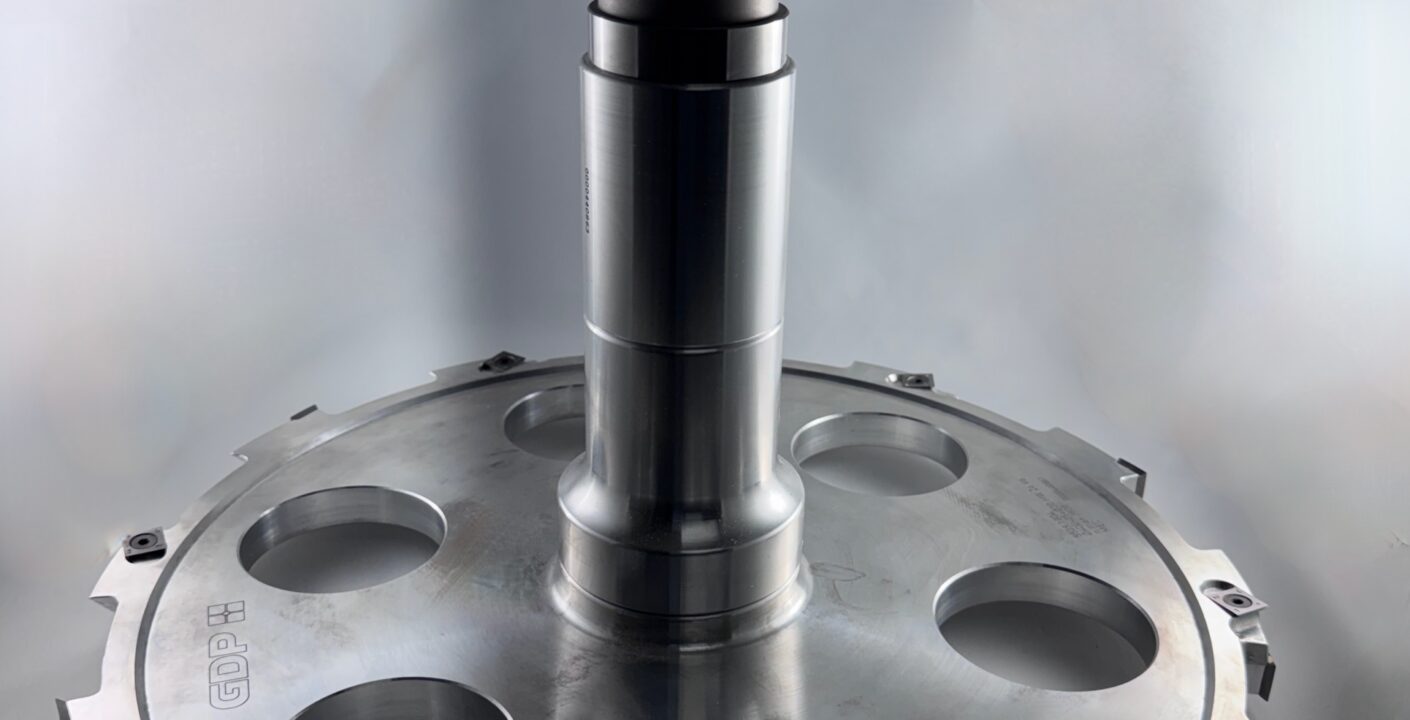
Recently, GDP Tooling worked with a manufacturer of structural insulated wall panels who needed a way to remove the expanding foam insulation from around the perimeter of large panels before assembly.
The panels are joined together using tenon-style connections, requiring approximately 7.5 inches of foam to be removed around each edge while leaving the structural skins intact.
The challenge sounds straightforward—until you consider the size of the parts.
These panels measure as much as 8–10 feet wide and 12–15 feet long, making conventional machining approaches impractical
The Problem
For years, the customer relied on manual methods.
Their first process used a heated cutting coil to melt away the foam. While effective, it was extremely slow and labor intensive.
To improve productivity, they developed a rotating “brush” made from long steel tines twisted around wire cores. Although this increased production speed, it introduced two serious problems:
- The brushes wore quickly.
- Metal tines could break loose at high RPM, becoming dangerous projectiles while also contaminating the foam with loose wire fragments.
They also experimented with modified paddle bits, but these lacked the reach required and still required extensive hand finishing.
The result was a production bottleneck that limited throughput while creating unnecessary safety concerns.
Previous Attempts
The customer had already spent nearly two months working with another tooling supplier to develop a solution.
Prototype concepts were created, but ultimately they were told the tool simply couldn’t be manufactured.
At that point they approached GDP Tooling.
Engineering Challenges
Designing the tool meant overcoming several significant engineering obstacles simultaneously.
The final cutter needed to:
- Reach a mandatory 7.5-inch cutting depth
- Produce approximately a 1-inch kerf
- Stay below the machine’s 10 kg spindle weight limit
- Interface with an HSK-A spindle connection
- Incorporate the correct arbor system while maintaining rigidity
- Remain balanced for safe operation at CNC spindle speeds
Increasing the kerf width initially seemed desirable, but engineering analysis showed that a 2–3 inch kerf simply wasn’t feasible within the machine’s weight limitations.
The design evolved through multiple iterations before arriving at the optimal balance of strength, weight and cutting performance.
Engineering Through Collaboration
This project required close collaboration between several members of the GDP Tooling and the customer.
Multiple prototype concepts were evaluated.
Several early designs exceeded the allowable spindle weight, requiring significant redesign.
Eventually the original arbor concept was replaced with a shorter, lighter configuration that maintained the required cutting reach while bringing the complete assembly within specification.
From Design to Production
Although the engineering phase required numerous design revisions, production itself was completed in approximately six weeks.
From the initial design work through sourcing, engineering and manufacturing, the project progressed from concept to a fully functioning production tool in roughly three months.
Most importantly…
It worked.
The customer was able to replace a slow, manual operation with a CNC solution specifically engineered for their manufacturing process.
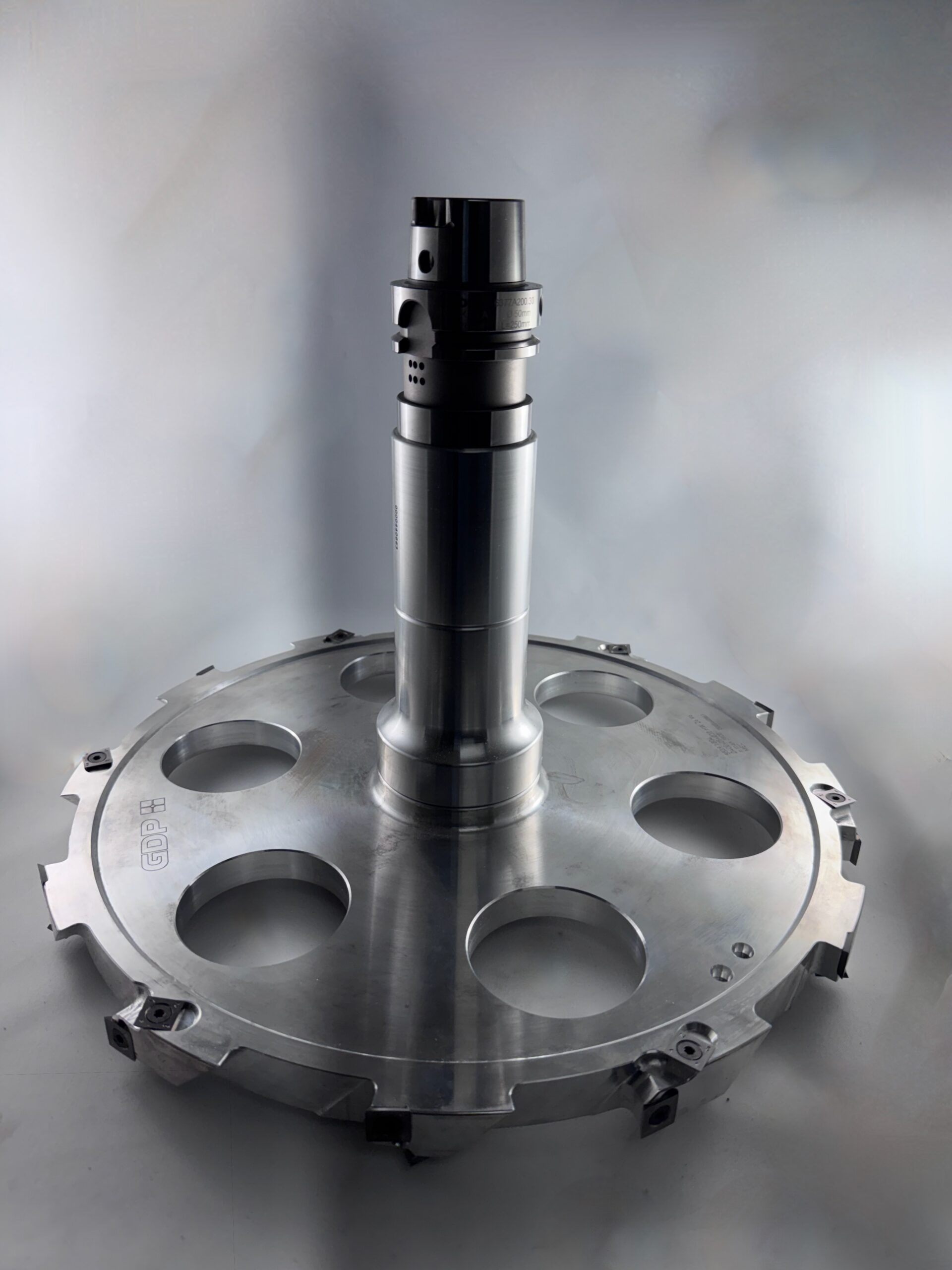
Many manufacturers assume that if an off-the-shelf tool doesn’t exist, their process simply can’t be automated.
In reality, the right custom tooling partner can often solve challenges that initially appear impossible.
Whether you’re machining wood, composites, foam, plastics, aluminum or engineered materials, custom tooling can dramatically improve:
- Cycle time
- Repeatability
- Operator safety
- Tool life
- Product consistency
Custom Tooling Is Often an Investment in productivity.
As the construction industry increasingly adopts structural insulated panels (SIPs), composite wall systems and other prefabricated building technologies, manufacturers continue to encounter unique machining challenges that standard tooling simply wasn’t designed to address.
Projects like this demonstrate how custom tooling can remove production bottlenecks while improving both efficiency and safety.
If your manufacturing process involves a difficult machining operation, we’d welcome the opportunity to evaluate it. Sometimes the right solution isn’t found in a catalog—it starts with a conversation.
Need a custom tooling solution?
GDP Tooling specializes in designing and manufacturing custom carbide and PCD tooling for wood, composites, plastics, advanced materials and industrial CNC applications. If another supplier has told you it can’t be done, let’s talk!